How can you identify a genuine Carl Scheidig porcelain figurine?
- Jun 28
- 1 min read
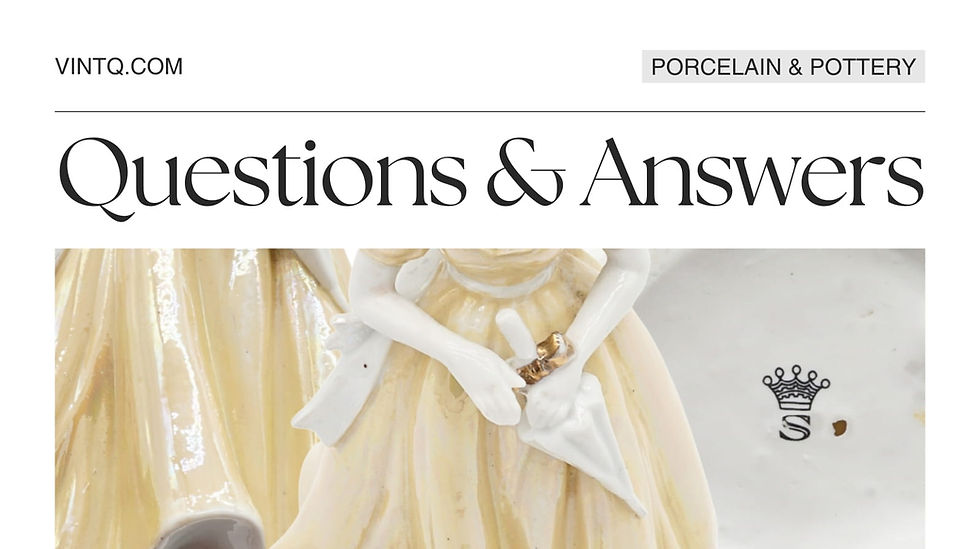
A genuine Carl Scheidig porcelain figurine can usually be identified by studying the base, factory mark and overall quality of the piece. Carl Scheidig porcelain was produced in Gräfenthal, Germany, and many figures carry an impressed or printed factory mark together with mould numbers. Those markings help collectors estimate the production period and compare examples with published reference guides. The porcelain itself should feel finely made rather than heavy or coarse. Hand-painted decoration often shows careful brushwork, particularly around faces, clothing and floral details and small variations in colour are normal since painters completed much of the decoration by hand instead of relying entirely on mechanical methods. Old factory marks may show light wear that matches the age of the figurine. Fresh paint covering damage, poorly matched repairs or unusually bright modern colours can reduce collector confidence. Many Carl Scheidig figures were created from moulds designed by skilled sculptors working in the Thuringian porcelain industry. Matching mould numbers with known catalogue examples offers another useful clue. Measurements should match published sizes within a small margin and photographs from several angles, including the base, help specialists compare a figure with documented examples.